By Rob Greenlee
Spotify’s decision to support Apple Podcasts’ HLS video streaming approach is a bigger signal than it may first appear.
 On the surface, this looks like a practical product update. Spotify for Creators and Megaphone need to support Apple’s new HLS video publishing workflow, so Spotify-hosted creators can publish video podcasts into Apple Podcasts without having to rebuild their whole setup on a different platform to get video into Apple Podcasts. Spotify has said that support for both Spotify for Creators and Megaphone is coming later this year, and that it is working with Apple on the integration.
But underneath that announcement is a much larger industry reality. Apple Podcasts remains the market mover in podcasting. When Apple changes something meaningful in podcasting, the industry aligns around it very quickly. That has been true since the early days of the iTunes podcast directory, and it remains true now. YouTube is massive. Spotify is powerful. Both are major forces in video, discovery, audience behavior, and creator monetization. But neither one has historically been able to shift the core technical direction of podcasting the way Apple can.
Apple’s move to support HLS video podcasts inside Apple Podcasts is not just another video feature. It is a market shift signal.
Apple is saying that video podcasting needs to work more like modern streaming media while still preserving the podcast model that creators, hosting companies, and listening platforms have built around for two decades.
Apple describes the new HLS video experience as allowing listeners to switch between audio and video, view horizontally, download video for offline viewing, and continue using existing podcast features, such as follows and downloads. Apple also says creators can monetize through sponsorships and dynamic advertising, including video ads provided by the creators’ hosting platform.
Since 2005, video podcasting has been available in Apple Podcasts as an MP4 video download via RSS, while non-RSS-based video distribution has gained traction on platforms like YouTube, which support video. Spotify has had video podcasts via direct upload, like YouTube, with a few API based submission processes.
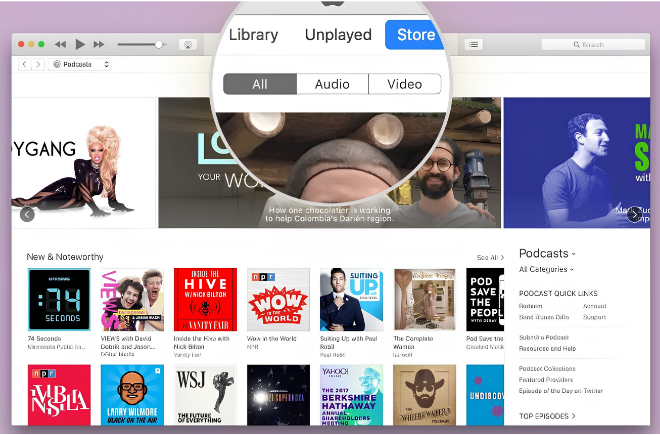
Below is Apple iTunes Podcasts page on MAC and Windows.
Below is a screenshot of the Microsoft Zune Marketplace software on Windows from 2011.
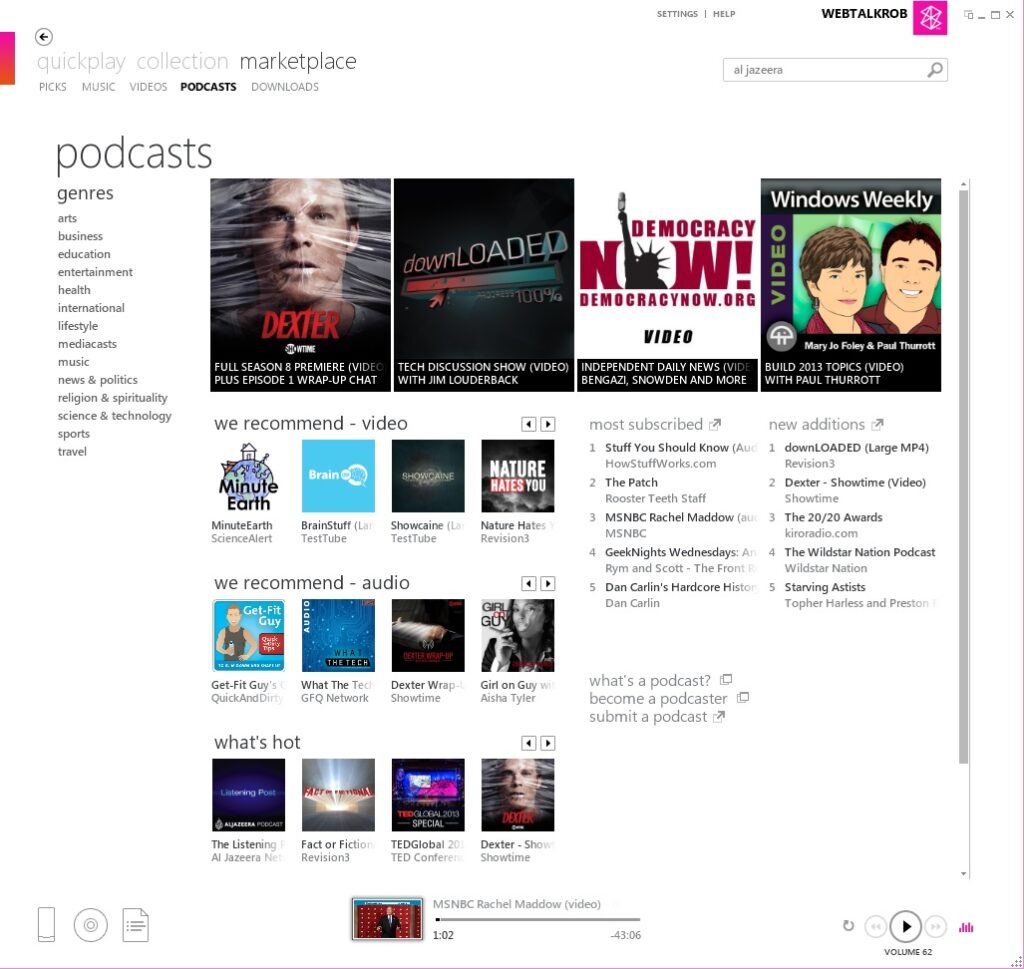 Apple is not new to video podcasts, as well as the early (2007-2014) Microsoft Zune supported Video Podcasts (see image above); Apple has supported video since the earliest years of podcasting, when they were a significant part of the medium, with most mainstream media companies, large and small, supporting video podcasts via RSS, like HBO, Showtime, CNN, MSNBC, Comedy Central, and most others you can think of. Independent creators like Ask a Ninja and startups like Revision3 and TWIT.TV.
But since about 2014, video has not been central to the Apple Podcasts app, making it hard to discover it there today. Video podcasting was there but not treated as a first-class media experience in the Apple ecosystem, and thus declined in popularity as audio podcasts became dominant.
Now Apple and Apple Podcasts are moving video podcasting into a more modern HLS streaming framework, the same method YouTube uses to stream video.
All the above is why Spotify’s support for Apple’s HLS video publishing workflow is not optional. It is required if Spotify wants Megaphone and Spotify for Creators to remain competitive in podcast hosting.
Spotify cannot afford to be in a position where a creator using Spotify’s own hosting tools has a harder time publishing video to Apple Podcasts than a creator using Acast, ART19, Omny Studio, Transistor, Podigee, Libsyn, Blubrry, iHeart, or other hosting providers that have moved quickly into Apple’s HLS video workflow. Apple’s support materials already tell creators to work with a hosting provider that supports video via HLS on Apple Podcasts.
So Spotify had to move.
That does not mean Spotify suddenly became a fully open podcasting infrastructure company. Spotify has always been a bit of a rebel in the podcasting market. It often adopts podcasting approaches that shift the advantage toward Spotify’s own platform, app experience, audience data, and monetization systems. That is not always bad. Spotify has pushed the market forward in some areas, especially around video adoption and creator monetization inside its own ecosystem.
But Spotify has not typically been the company that aligns the whole podcasting industry around open, cross-platform technical standards.
Apple still plays that industry leadership role more than anyone else.
The next big question is whether Spotify stops at supporting Apple’s HLS publishing workflow or goes further.
Will Spotify add HLS video streaming support via RSS using an Alternative Enclosure or a similar pass-through model, so video stream links can flow beyond Apple Podcasts into other podcast apps and platforms?
That is the question that matters now.
If Megaphone and Spotify for Creators can support HLS video for publishing into Apple Podcasts, could they also support HLS video links inside RSS for external podcast consumption platforms like iHeart, Pocket Casts, Overcast, Fountain, and other apps that may want to support video playback in a more modern way?
That would be a much bigger move.
It would mean Spotify is not only supporting Apple’s new video podcast workflow because it has to. It would mean Spotify is helping make HLS video distribution more available across the broader podcast ecosystem. Really helping the broader industry to actually innovate in the RSS feed they have spent years criticizing was not happening.
The Alternative Enclosure concept matters because podcasting has long been built around the RSS media file enclosure model. Traditionally, that meant an audio file, often an MP3, delivered as a downloadable media file. For years, video podcasts have often meant an MP4 file. But modern video distribution does not really want to live solely in a giant downloadable-file model anymore.
HLS, or HTTP Live Streaming, breaks video into adaptive streaming segments. It is the way much of modern video delivery already works across the streaming media world. It can adapt to bandwidth. It can create a better user experience. It can open up better advertising possibilities. It can improve playback reliability. It can make video podcasting feel less like downloading a file and more like a contemporary media experience.
That is where podcasting is heading: Video-First.
The download model has served podcasting incredibly well. It gave podcasting its open distribution foundation. It allowed creators to publish once and reach many apps. It gave the medium independence from a single-platform gatekeeper, was simple, and took advantage of the limited bandwidth of the earlier medium-birth era that has now passed.
But as the industry moves deeper into video, dynamic video and audio ad insertion, cross-device (screen sizes) consumption, and seamless listen-to-watch and watch-to-listen behavior, the old download-first model is increasingly looking outdated as both the central delivery method and the metrics, too.
That does not mean RSS goes away. It means RSS has to evolve.
Podcasting needs to preserve the creator-controlled, open distribution layer while allowing modern media delivery, such as HLS, underneath it. That is the real importance of Apple’s HLS move. Apple is not adding video, as they have had video all along. Apple is forcing the hosting industry to rethink how podcast video and increasingly audio should be delivered, monetized, measured, and experienced.
Then everyone else has to respond. That is the cascade effect.
Hosting platforms have to support HLS publishing workflows. Ad tech platforms have to think about video and audio ad insertion differently. Metrics providers have to account for streams, downloads, plays, watch behavior, and hybrid listening/viewing sessions. Podcast apps have to decide whether they remain audio-only experiences or become richer show-consumption platforms. Creators have to decide whether their shows are audio-first, video-first, or multi-format, adapting to where the audience is.
Podcast Consumers will not care about the technical details. They will just expect the experience to work.
They will expect to start listening in the car, continue watching on a tablet, pick up later on a desktop, and still feel like it is the same show, because it is. Apple’s HLS video podcast experience is clearly aimed at that kind of seamless consumption behavior.
This is where podcasting becomes less about podcast media files and more about consuming shows at scale.
I have been saying for a while that podcasting is moving into a broader show-based media era. Audio is still core. Audio remains the most intimate and flexible format.
Video is now central to discovery, trust, audience connection, and monetization. The question is not whether video belongs in podcasting. It does. The question is whether the podcasting ecosystem can support video without simply handing everything over to YouTube, Spotify, or any other closed platform.
That is why Apple’s move matters.
Apple Podcasts is the only major podcast platform with sufficient market power to drive the industry toward a more modern technical layer while keeping podcasting connected to RSS-based distribution and creator-controlled publishing.
Spotify’s support for Apple HLS video is a practical business decision. Megaphone and Spotify for Creators need to stay competitive. But it is also an acknowledgment that Apple still has the power to set the technical direction of podcasting when it chooses to act.
The next test is whether Spotify will support this only where Apple requires it, or help extend HLS video publishing more broadly through RSS pass-through and Alternative Enclosure-style support.
This is where the industry should be watching.
If the HLS video format becomes something Apple supports only through approved hosting integrations, then we have a powerful new Apple Podcasts video layer.
If HLS video becomes something that can travel through RSS in a broader, interoperable way, then podcasting takes a much bigger step toward a modern open media future.
That second path is the one that could change everything.
It could impact consumers, creators, hosting companies, monetization systems, metrics standards, and listening/viewing platforms.
It could also finally move podcasting beyond the limits of the download model while preserving the open publishing spirit that made podcasting matter in the first place.
Spotify’s support for Apple’s HLS video shift is not just about Spotify. It is about Apple once again moving the podcasting market, and the rest of the industry deciding how open, modern, and creator-controlled the next era of podcasting will be.
About the Author
Rob Greenlee is a 2017 Podcast Hall of Fame inductee and Chair, a global new-media leader who bridges podcasting’s human roots and its AI-driven future. As founder of Trust Factor Lab and host of the “New Media Show” and “Spoken Human”, Rob helps creators start, grow, monetize, and future-proof their content. He’s held leadership roles at Microsoft, Spreaker, Libsyn, StreamYard, and PodcastOne, and serves as Chairperson of the Podcast Hall of Fame. Learn more at RobGreenlee.com and join the Trust Factor Lab Creator/Podcast Services.
Personal note: I used AI tools to help organize this article and hand-edited it; the views, clarifications, responsibility, and industry perspective are mine. I have been working in podcasting and platform adoption for more than two decades, and this article reflects my own position. The original word choice was mine, and so is the clarification.