by Rob Greenlee, CEO/Founder, Trust Factor Lab and Trust Creator Community at M3Linked.com, Host of NewMediaShow.com & Spoken Human
 I have been in this medium long enough to watch it evolve through every major shift, from RSS and portable listening to smartphones, streaming platforms, video, dynamic ad insertion, and now AI-assisted media creation.
Every time real change hits podcasting, some part of the industry reacts as if the medium itself is under attack. That reaction is understandable. But fear is not a strategy. It never has been.
What is happening now with AI-generated podcasts, cloned human voices, and AI-assisted publishing is no longer some fringe experiment. It is becoming part of how media will be created, scaled, distributed, discovered, and monetized. Pretending it is not happening, or trying to shame the entire category out of existence, is not leadership. It is avoidance.
“I understand why many creators feel threatened. There are already irresponsible uses of AI in media and podcasting. We are seeing low-quality synthetic shows, questionable voice cloning, automated content pushed live without real editorial judgment, and content factories producing more noise than value. That deserves criticism. That deserves scrutiny. That deserves standards.”
But condemning all AI-generated podcast content simply because some people use it poorly is short-sighted.
The industry also needs to be honest about something else. Not all human-created content is good either.
“A lot of human-created podcast content has always been weak, repetitive, poorly positioned, or disconnected from what audiences actually want. Low quality did not arrive with AI. Human creators have been making forgettable content for years. So the dividing line is not human versus AI. The real dividing line is between valuable and worthless, trusted and deceptive, and intentional and careless“.
That is the conversation we should be having.
AI-generated podcast show creation is already contributing to new content growth at a time when growth among human-only creators has slowed and, for the past two or so years, flatlined in RSS-based podcasting.
Many human creators are burning out, publishing less, or shifting their energy toward video, social platforms, and private communities. AI-assisted creation is starting to fill part of that gap.
And yes, whether people like it or not, AI will create popular shows. I believe we are already seeing many signs of that.
Audiences do not reward content simply because it was made entirely by a human. They reward content that is useful, compelling, entertaining, emotionally resonant, and worth coming back to. That may make some people uncomfortable, but discomfort does not change the market’s direction.
“This does not mean all AI content is good. It means the industry needs to get much smarter about what good looks like and how trust is maintained as synthetic and human-led media continue to blend together.”
That belief sits at the center of what I am building with Trust Factor Lab.
—————————————————————————————–
The mission of Trust Factor Lab is grounded in a simple truth: building a brand is not about being seen; it is about earning trust. In a media environment increasingly filled with synthetic content, AI-generated voices, and automated publishing, the long-term winners will not be the loudest creators or the fastest content factories. The winners will be the people and companies that know how to turn trust into measurable growth through authentic storytelling, strong production standards, smart distribution, and AI-assisted workflows that protect the human voice rather than eroding its integrity.
That same philosophy drives the Trust Creator Community at M3Linked.
The purpose of that community is to help creators, leaders, and brands build trust-first media businesses in a world where human-made and AI-assisted content increasingly coexist. It is a place to develop the skills, standards, and mindset needed to grow without losing credibility. It is a place to learn how to use AI strategically without losing touch with the audience. Most importantly, it is built around the belief that trust is not a vague or soft concept. It is the foundation of audience growth, loyalty, monetization, and long-term relevance.
This is also why I believe being reflexively anti-AI may be a long-term mistake for podcasting and new media.
The better path is not blind acceptance. It is responsible leadership.
In recent episodes of New Media Show, I have been exploring this issue from several angles. In conversations with Jeanine Wright, we discussed AI-generated hosts, synthetic personalities, disclosure, and whether trust may transfer to AI voices.
In my discussion with Justin Jackson, we examined the growing reality of synthetic creators and cloned human media as part of a broader shift in the creator economy.
In another conversation with Dave Jackson, we touched on why live content may become even more valuable as proof of life in an increasingly synthetic media-filled world.
And in discussions with Arielle Nissenblatt, the focus kept returning to a simple truth that still matters in any era: if a show is not clearly positioned, consistently valuable, and genuinely recommendable, no amount of technology will create lasting trust.
“An important point is that AI may make content creation faster. It may make show generation easier. It may create breakout hits. But none of that removes the need for audience trust, clear positioning, differentiation, and a real reason for people to care”.
Trust still decides what connects and adds lasting value for humans, the second-level consumers of any AI or human-created content.
AI will be the first consumer of any human- or AI-created content, evaluating whether it is worthy of human consumption.
“That is why the podcasting industry needs to move quickly toward AI best practices. We need standards around consent and licensing for cloned voices and likenesses. We need norms around disclosure in show descriptions, metadata, and listening environments. We need stronger editorial standards for AI-assisted episodes, especially in news, education, health, finance, and expert commentary. We need clearer definitions of what qualifies as responsible AI-assisted publishing versus synthetic spam. And we need platforms, advertisers, and creators to have a more honest conversation about how trust should affect monetization”.
Most importantly, we need leaders in podcasting to stop treating this as someone else’s problem. This is our problem. It is also our opportunity.
Podcasting has always been one of the most intimate media formats in the world. It is built on voice, trust, authenticity, and relationship. That gives this medium a unique opportunity to help define how AI-generated spoken content should evolve responsibly. If podcasting does not lead this conversation, others will. And they may care far less about trust, disclosure, creator protection, and audience respect than we should.
I am not arguing for blind acceptance of everything AI brings.
I am arguing for a mature, strategic, trust-centered response to a technology that is already reshaping the media landscape. That means being tough on bad actors, clear about ethical boundaries, and proactive in establishing standards before harmful habits become normalized.
How AI Creators, Agents, and Human Operators Build Trust
If AI-generated creators, cloned human voices, and agent-driven media systems are going to earn public trust, they cannot rely on novelty alone. They need clear rights-based operating and disclosure principles.
First, they need disclosure (ShouldIDisclose.AI).
Audiences should know when a show, segment, voice, or script is AI-assisted or fully AI-generated. Hidden AI is where suspicion grows fastest.
Second, there is a need for consent and ownership of rights (Royall.ai).
No cloned voice or likeness should be used without explicit permission. Human creators should control how their cloned identity is trained, where it appears, and what kinds of content it can be used for.
Third, as of today, they still need human editorial direction and oversight.
Even when AI generates a first draft, human judgment should still approve the final output, especially when the content includes facts, advice, analysis, or sensitive public claims. AI can accelerate production, but accountability still needs to be human-led.
Fourth, they need consistent content value and integrity.
Whether content is human-created or AI-assisted, it still has to be worth the audience’s time. Audiences may tolerate new workflows, but they will not remain loyal to useless, low-integrity content.
Fifth, they need a stable identity and consistent human-like trust behavior.
AI creators and agents need a recognizable point of view, clear standards, and consistency over time. Trust grows when audiences understand what a creator stands for and what to expect.
Sixth, they need an explainable, transparent, human-understandable process.
Audiences do not need a technical white paper, but they should always be provided a path to understand trust-building basics. Is the show human-led and labeled human? Is it a licensed and disclosed clone? Is it built from approved source material? That clarity matters.
Seventh, they need visible correction and accountability.
AI systems will make mistakes, though likely fewer in the future. Trust grows when creators and operators correct those mistakes clearly and quickly, rather than hiding behind the technology.
Eighth, they need respect for emotional boundaries.
Synthetic hosts and cloned creators should never manipulate audiences by making inaccurate claims and trying to scam humans by confusing simulation with a deeper human bond than what really exists. Engagement should not come from emotionally human-like behavior that leads to deception.
Ninth, they need aligned incentives with integrity.
If a synthetic show/host is obviously designed only to flood feeds, maximize ad inventory, or game recommendation systems, audiences will sense that. Trust holds when audience benefit and creator integrity remain central.
Tenth, they need real human feedback loops.
The more AI-driven the content production process becomes, the more important it is to maintain authentic ways for audiences to question, respond to, and influence the content’s direction.
The Standard in New Media and Podcasting That Matters
- The podcasting industry should not be known for panicking about AI.
- It should be known for shaping the responsible use of AI in a medium where human trust matters more than ever.
- The real challenge now is not whether AI-assisted or cloned human content should exist. It will.
- The real challenge is whether we will build it in ways that strengthen human connection, preserve creators’ integrity, and create more value for audiences, rather than undermining all three.
That is why we are building the Trust Creator Community at M3Linked.
And that is the larger conversation the podcasting industry needs to have right now. Not a panic-driven conversation. A leadership-driven one.
About the Author
Rob Greenlee is a 2017 Podcast Hall of Fame inductee and Chair, a global new-media leader who bridges podcasting’s human roots and its AI-driven future. As founder of Trust Factor Lab and host of the “New Media Show” and “Spoken Human”, Rob helps creators start, grow, monetize, and future-proof their content. He’s held leadership roles at Microsoft, Spreaker, Libsyn, StreamYard, and PodcastOne, and serves as Chairperson of the Podcast Hall of Fame. Learn more at RobGreenlee.com and join the Trust Factor Lab Creator/Podcast Services.
Personal note: I used AI tools to help organize this article and hand-edited it; the views, clarifications, responsibility, and industry perspective are mine. I have been working in podcasting and platform adoption for more than two decades, and this article reflects my own position. The original word choice was mine, and so is the clarification.
 On the surface, this looks like a practical product update.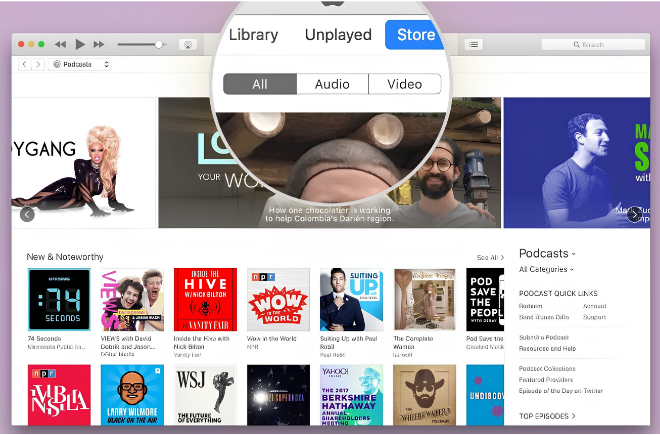
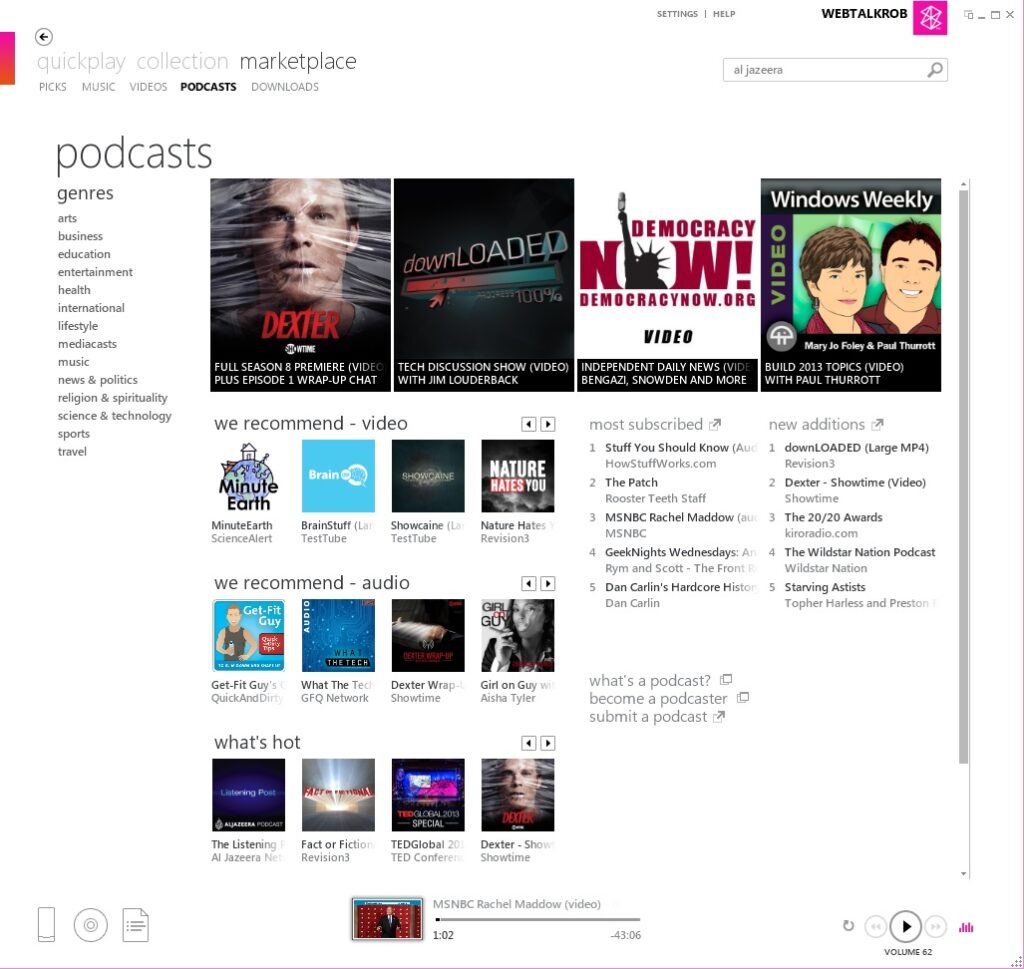 Apple is not new to video podcasts, as well as the early (2007-2014) Microsoft Zune supported Video Podcasts (see image above);
 I see that 2016 will bring continued and steady growth in the on demand audio and podcast markets though with some consolidation of larger players.